With the launch of the Gravity Range in 2022, Continental made it clear they were serious about entering the gravity-focused segment of mountain biking. Alongside the launch came a major change in the naming of their tires. Gone were the regal-sounding classics like “Kaiser”, “Baron” and the various “King” models – replaced by a new, more technical and clearly structured naming system that, while more logical, lost some of the charm of the originals. In April 2025, Continental took things a step further by updating their former XC and trail models with names that fit the Gravity line’s new naming convention. The introduction of tires like Dubnital, Trinital and Magnotal marked the end of the old “royalty” era, aligning the entire MTB portfolio under one cohesive concept. The new names are inspired by the English names of chemical elements, blended with the “TAL” suffix from ContinenTAL. Here are a few examples:
Kryptotal = Krypton + TAL
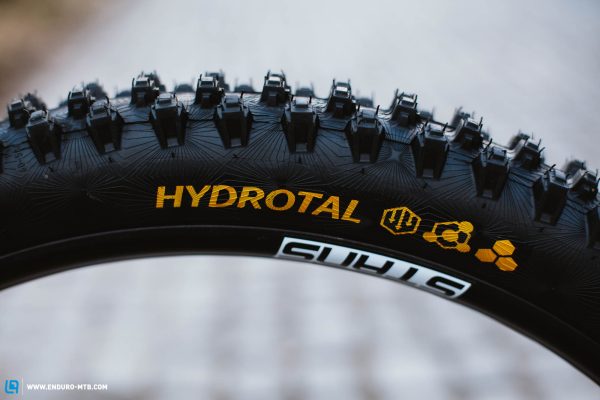
Hydrotal = Hydrogen + TAL
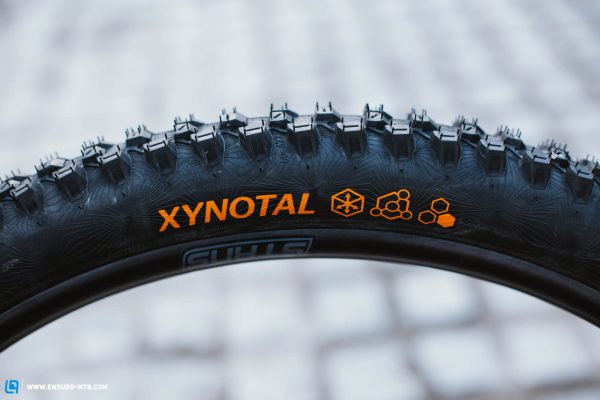
Xynotal = Xenon + TAL
Argotal = Argon + TAL
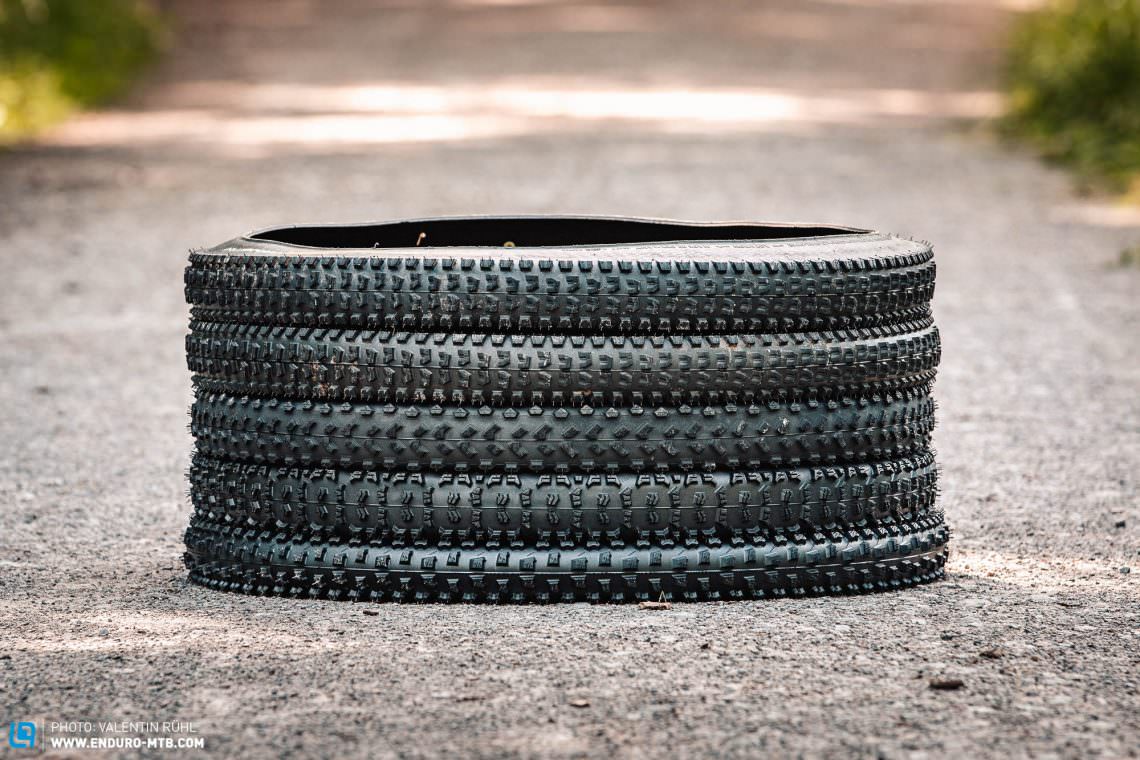
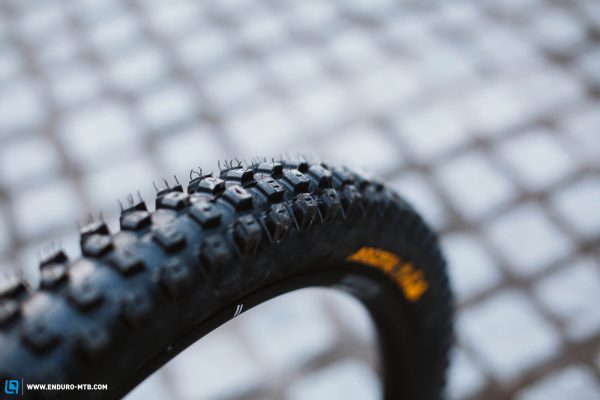
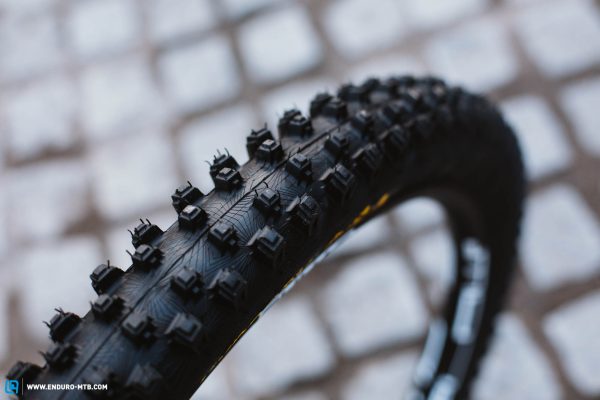
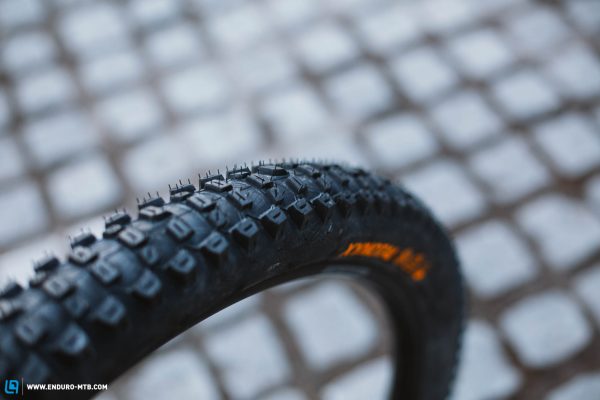
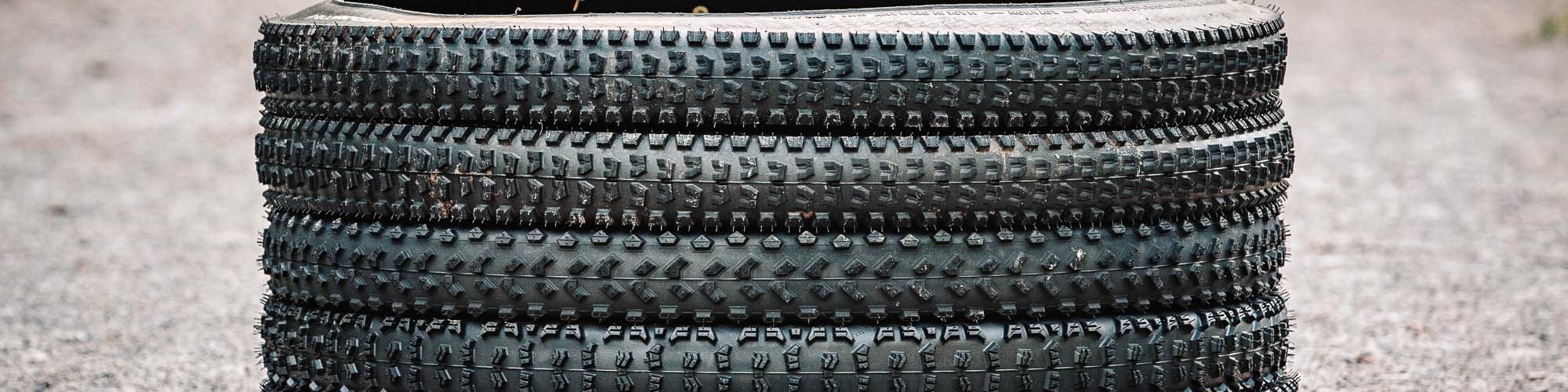
Visually, too, there’s been a significant departure from Continental’s old tire range – the current models stand out thanks to the distinctive textured pattern across the entire tread surface. Possibly the best-looking tires in the whole comparison test? But as we all know, looks aren’t everything. So of course, we put them through their paces on the trails – no mercy given.
| Model | Weight | Price |
|---|---|---|
| Kryptotal-Fr SuperSoft Compound Downhill-Casing 29 x 2.40 |
1,310 g | € 89.95 |
| Kryptotal-Fr Soft Compound Enduro-Casing 29 x 2.40 |
1,167 g | € 69.95 |
| Kryptotal-Fr SuperSoft Compound Enduro-Casing 29 x 2.40 |
1,208 g | € 81.95 |
| Argotal SuperSoft Compound Enduro-Casing 29 x 2.40 |
1,227 g | € 62.95 |
| Kryptotal-Re Soft Compound Enduro-Casing 29 x 2.40 |
1,199 g | € 69.95 |
Continental’s casings at a glance
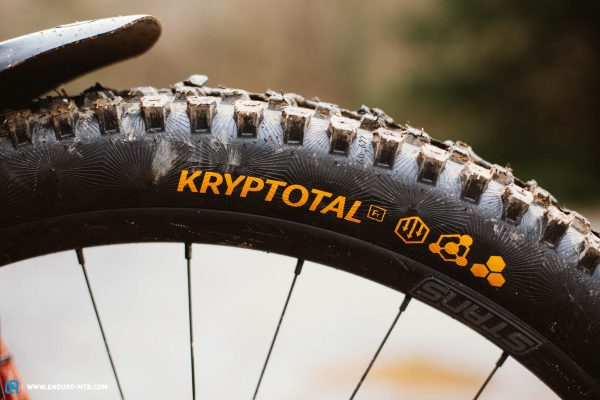
Continental developed four different casings for the mountain bike segment: Race, Trail, Enduro and Downhill. While the naming is refreshingly simple and easy to grasp, the labelling itself requires a bit more attention. Each casing is identified on the tire’s sidewall using hexagonal icons arranged in a honeycomb structure. The more of these hexagonal cells are filled in, the more robust the casing is. All casings feature a foldable bead made from aramid fibres, are tubeless-ready, and approved for use on e-bikes.
In addition to the casing icon, the tire sidewall also features a second symbol that indicates the intended use. Once again, Continental use the categories Race, Trail, Enduro and Downhill, this time represented by arrow icons. For example, the Enduro category is marked by two downward arrows and one upward arrow, while the Downhill segment leaves no room for doubt with three arrows pointing straight down.
Race
The Race casing was introduced in 2025 alongside Continental’s new XC/trail tire range. The single-ply casing construction is Continental’s solution for cross-country and down-country riding, designed to be fast, lightweight and supple.
Trail
The Trail casing features a single-ply construction with a 60 TPI fabric density. A cross-woven layer runs from bead to bead, providing additional protection against cuts and tears. Tires with the Trail casing are primarily designed for demanding down-country and trail riding.
Enduro
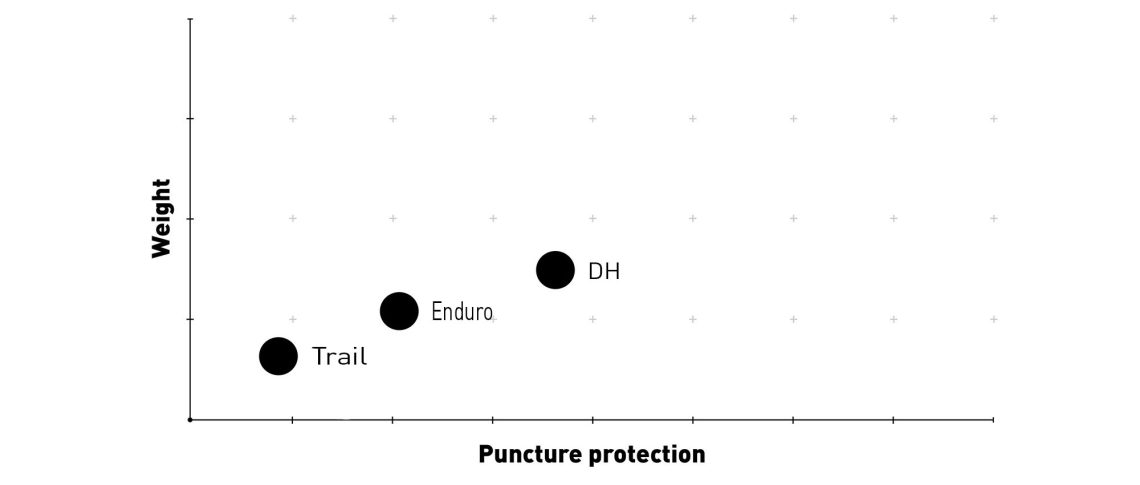
The Enduro casing also relies on a single-ply construction and is structurally similar to the Trail casing, but features a 110 TPI casing material and includes an additional Apex reinforcement. This insert is designed to protect the tire against snake bites and provide added sidewall stability. In the lab, Continental’s Enduro casing delivered a solid performance, albeit with below-average results in the impact test. Puncture protection on both the tread and the sidewall is relatively weak as well, putting it on par with MAXXIS’s EXO+ casing – and the same applies to weight. On the trail, the Enduro casing exhibits very stiff and supportive despite its relatively low weight and fine 110 TPI fabric. This translates into solid support in berms and gives the impression that grip is primarily generated through the tread pattern itself. However, this doesn’t seem to compromise perceived damping. In fact, when paired with the SuperSoft compound, the damping of the Enduro casing stood out in a very positive way.
Downhill
The DH casing uses the same 110 TPI fabric as the Enduro version but features a significantly more robust construction. With six layers of casing material under the tread and four on the sidewalls, the downhill casing follows a traditional dual-ply design, which makes it twice as strong as the Enduro and Trail casings. In our lab tests, the DH casing showed its strength especially in puncture resistance on the tread, clearly highlighting its heavy-duty build. When it comes to impact resistance, however, the gain over the Enduro casing was marginal. As a result, the overall puncture protection score – similar to Pirelli’s DH casing – falls slightly short of the most heavy-duty options on the market, though it does come in lighter than many of its rivals.
Continental’s rubber compounds at a glance
The rubber compound is also indicated on the tire sidewall via a pictogram. Continental use a molecule-like icon to display the compound’s softness: the more of the circular “molecules” are filled in, the softer the compound. With the introduction of their new XC/Trail tires, two additional compounds – “Rapid” and “Grip” – were launched, completing the visual scale. Continental now use a total of five rubber compounds: Endurance, Rapid, Grip, Soft, and SuperSoft, offering a wide range of performance – from low rolling resistance for efficient riding to ultra-tacky rubber for gravity-focussed traction. However, as with most manufacturers, not every tread or casing is available with every compound – so your choice may be limited depending on the tire model and intended use.
Endurance
The Endurance compound is designed to generate low rolling resistance and minimal wear. Continental prioritise longevity with this rubber blend, claiming it delivers the best durability of all their compounds. However, this comes at the cost of the lowest grip level and minimal damping performance within their range. Despite this, Endurance is still found on some models in the Gravity line, although only in variants with the Trail casing. With the introduction of the newer Rapid and Grip compounds – both ensuring improved downhill performance – the use of Endurance on gravity-focussed tires now seems somewhat outdated. That said, Continental already began to align their lineup accordingly: the new Magnotal trail tire, for instance, is available not only with the Soft compound, but also with the more versatile Grip compound.
Rapid
The new Rapid compound is designed for speed and efficiency, drawing on rubber technologies originally developed for Continental’s road and gravel tires. It delivers the lowest rolling resistance of any Conti compound, while still offering better damping and grip than the Endurance compound.
Grip
With slightly more rolling resistance than the Endurance compound but significantly better grip and damping qualities, “Grip” is Continental’s new all-round compound. It’s designed to strike the best compromise between rolling resistance and traction, which makes it especially well suited for XC and trail use. We’d love to see it used on the rear tire of Gravity Line models instead of the Endurance compound.
Soft
Continental’s soft compound is clearly aimed at gravity riders, designed to be both grippy and compliant. Despite its high levels of traction, rolling resistance hasn’t been completely compromised. Our lab results back this up: when paired with the Enduro casing, the compound showed relatively low rolling resistance– making it a viable option even for use on the rear wheel.
SuperSoft
“SuperSoft” is Continental’s grippiest compound, developed for downhill and demanding enduro use. Compared to the Soft compound, you’ll need to put in around 7 watts more to overcome rolling resistance, and you’ll also face the highest wear rate– but in return, you get the stickiest rubber Continental has to offer. Incidentally, you can identify the SuperSoft compound not only by the symbol on the tire sidewall, but also by the distinctive yellow lettering, which sets it apart from the usual orange print.
Continental’s tread patterns at a glance
Continental differentiate their MTB tires by terrain and riding conditions, with specific profiles for mixed terrain, hardpack, loose surfaces and mud. Within the Gravity Range, you’ll find the Kryptotal (Mixed) as an all-rounder, alongside more specialised options: the Argotal (Loose), Xynotal (Hard Pack) and Hydrotal (Mud). For trail riders, the latest Magnotal model could be an appealing option – it’s designed to bridge the gap between the XC line-up and the Gravity range. It’s available with either the Grip or Soft compound and in widths up to 2.6”, though currently only offered with the Trail casing.
Kryptotal
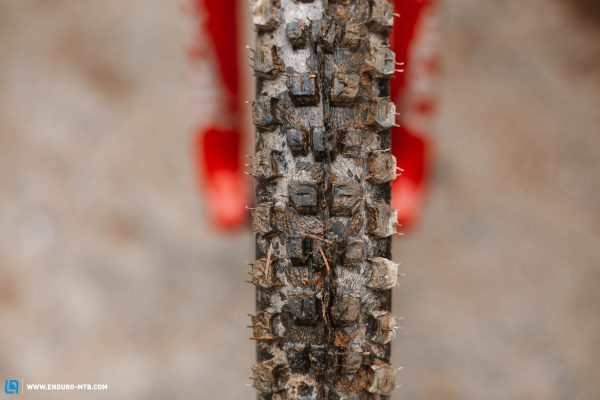
The Kryptotal is Continental’s all-purpose weapon for mixed conditions, and it’s the only tire in the line-up that was developed specifically for front and rear wheel use. That’s indicated by the additional “Fr” (Front) and “Re” (Rear) suffixes. Both versions are offered in a wide range of options. You’ll find the Kryptotal available for 20”, 24”, 26”, 27.5” and 29” wheels. The smaller sizes come with just one casing and compound each, while all popular wheel sizes are far more versatile – offered with Trail, Enduro or Downhill casing, paired with Endurance, Soft or SuperSoft compounds, and in either 2.4” or 2.6” widths.
Kryptotal-Fr
The tread pattern of the Kryptotal Fr is optimised specifically for front wheel performance – aiming to deliver plenty of stability, steering control and predictable handling. Out on the trail, even the version with the Soft compound impressed with great damping and a very predictable ride feel. Switch to the SuperSoft compound and things get even better. The Kryptotal’s grip threshold is broad and progressive, allowing you to ease up to the limit with confidence rather than risking any sudden loss of traction. Combined with its solid self-cleaning ability, the Kryptotal Fr performs well all year round.
Kryptotal-Re
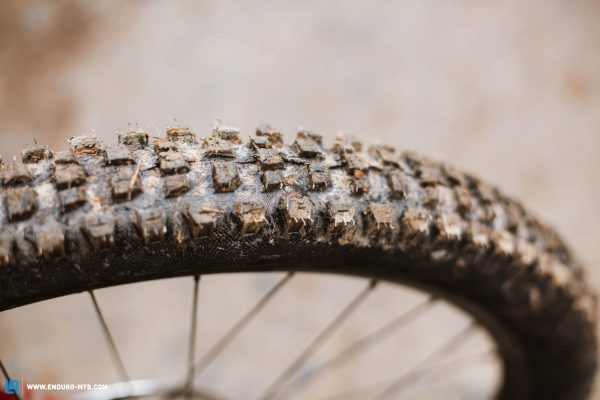
The Kryptotal Re is the rear-specific counterpart to the Kryptotal Fr. While both share the same side knobs for consistent cornering grip, the rear version features broader, paired centre tread blocks – designed to provide the braking traction, drive grip and straight-line stability you’d expect from a rear tire. Continental aimed to strike a balance between pronounced edges and low rolling resistance, a goal that’s backed up by our lab tests: the Kryptotal Re rolls with 3 watts less resistance than its front sibling. On the trail, the version we tested with the Soft compound offered an excellent compromise between confident cornering grip and strong braking traction, all while keeping rolling resistance pleasingly low.
Argotal
The Argotal is Continental’s specialist for loose terrain, designed with an open tread pattern that’s meant to provide excellent self-cleaning – especially in wet or damp conditions. In our test, it dug into the ground effectively, preventing any unwanted slips, while also offering a solid level of damping. And despite its grippy performance, you won’t have to compromise on rolling resistance – it registered only around 3 watts more than a Kryptotal Fr in lab testing. The Argotal is available with Trail, Enduro and Downhill casings, and comes in a choice of Endurance, Soft or SuperSoft compounds. Some configurations are offered in a 2.6” width, while all other versions are 2.4” wide and available in both 27.5” and 29” sizes.
Hydrotal
The Hydrotal lives up to its name – it really comes into its own when things get real wet. The open tread pattern is designed for maximum self-cleaning, while the reinforced side knobs are meant to improve cornering stability. Built specifically for downhill racing, the Hydrotal is only available with the DH casing, the SuperSoft compound, and in a 2.4” width for both standard wheel sizes. In deep mud, it inspires confidence with impressive grip and excellent self-cleaning qualities. Cornering support is solid, too, meaning that the Hydrotal still delivers a decent performance even on firmer ground.
Xynotal
The complete opposite of the Hydrotal, the Xynotal is built for hard, rocky terrain. The ramped knobs are designed to maintain constant contact with the ground, while the high proportion of positive tread is meant to maximise surface area on firm trails. This should also result in lower rolling resistance – although we couldn’t verify that in testing, as we didn’t have a sample. The Xynotal is available with Trail, Enduro and Downhill casings, and with Endurance, Soft or SuperSoft compounds. A wider 2.6” version is only offered in the 27.5” diameter, while all other versions come in a 2.4” width.
Our recommendation
Enduro – full send (f/r): Kryptotal-Fr Enduro SuperSoft / Kryptotal-Re Downhill Soft
Trail – grip (f/r): Kryptotal-Fr Trail Soft / Kryptotal-Re Enduro Soft
Trail – fast rolling (f/r): Kryptotal-Fr Trail Soft / Kryptotal-Re Trail Endurance
For more information, visit Continental’s website.
Our big ENDURO group test at a glance
Best Mountain Bike Tires – All major manufacturers compared!
All models in test
Did you enjoy this article? If so, we would be stoked if you decide to support us with a monthly contribution. By becoming a supporter of ENDURO, you will help secure a sustainable future for high-quality mountain bike journalism. Click here to learn more.
Words: Lars Engmann Photos: Peter Walker, Moonhead Media