BIKE TEST – Yeti SB-66: Enduro, all-mountain or trailblaster?
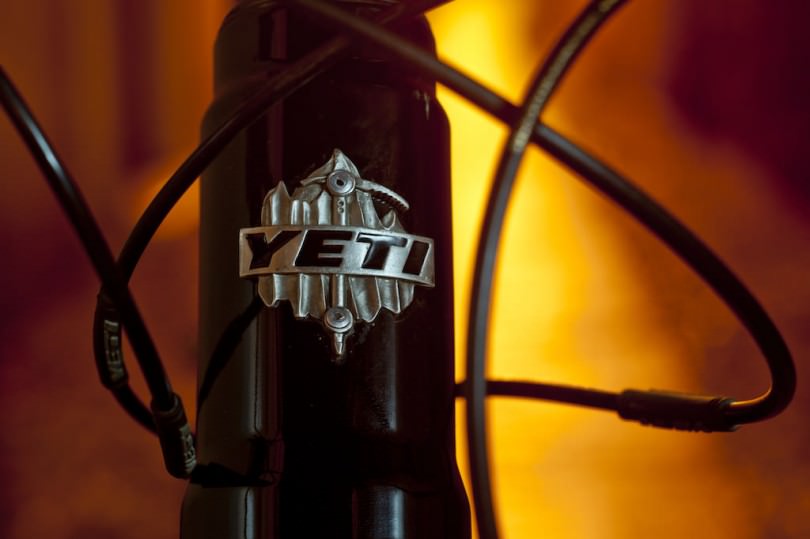
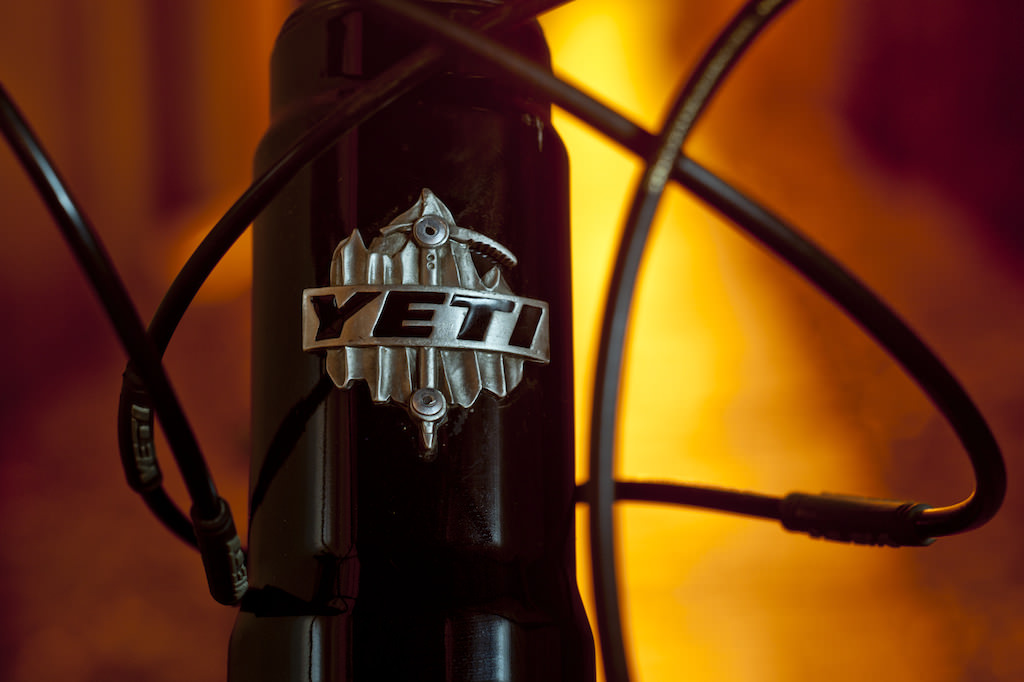
>> Expectations about the newest all-mountain creation from Yeti, the American cult bike-builders, are high. With good reason! Eventually, after two years of development, the engineers have released their new beast into the wild. Looks-wise, it is cool and appealing. Staged photos and videos leave us wanting more, and it seems very promising – but is the SB-66, with its 152 mm of rear travel, really the do-it-all-bike they say? In the middle of the Ligurian wilderness, we went looking for the right answer.
Only one glimpse is necessary to notice that lots of love was put into the Yeti’s design. Whether it‘s the voluminous square tubes on the front triangle and swing arm, the internal cable-housing inside the chainstay, or the rear post mount adapter,its look is unbelievably striking. Technically, the bike is totally up to date. There is one minor shortcoming, however, for some riders: with a weight of approximately 3.4 kg / 7.5 lb including rear shock, the exclusive aluminum chassis is definitely no lightweight.
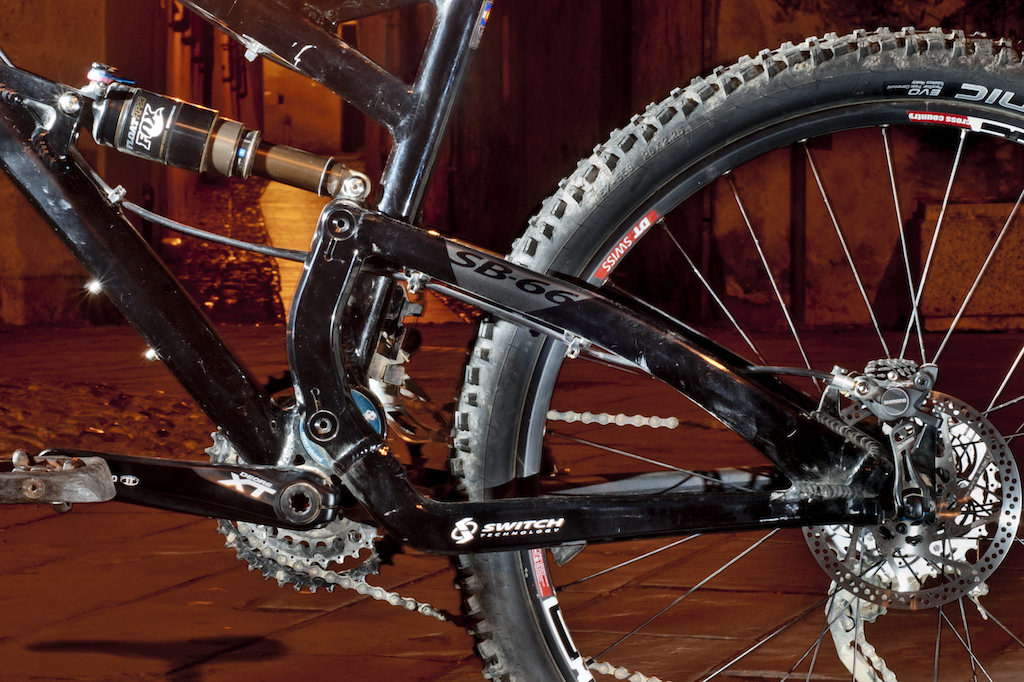
The SB-66 is not only unconventional in appearance, but also in the new Switch Technology suspension system. Here, the suspension system is a floating pivot point, with its lower linkage connected to an eccentric center of rotation. Going through its travel, the position of the center of rotation changes. At the beginning of the travel the eccentric link is rotating in a rearward direction to achieve the best possible anti-squat-effect, thus creating excellent pedaling efficiency. After about two-thirds (approximately 100 mm) into the travel, the eccentric micro-link starts to rotate clockwise, which is supposed to counteract the growth of the chainstay length and therefore minimize the pedal feedback.

A bike with more than one facet. All-mountain, enduro or both?

Uphill, the rear suspension isn´t as neutral as the theory wanted it to be. The slight movement of the rear suspension is not disturbing, though. You simply accept it because the suspension system impresses with excellent traction. Together with the extremely aggressive seating position – long top tube, low front – and light wheels / tires, the Yeti seeks its inner mountain goat.

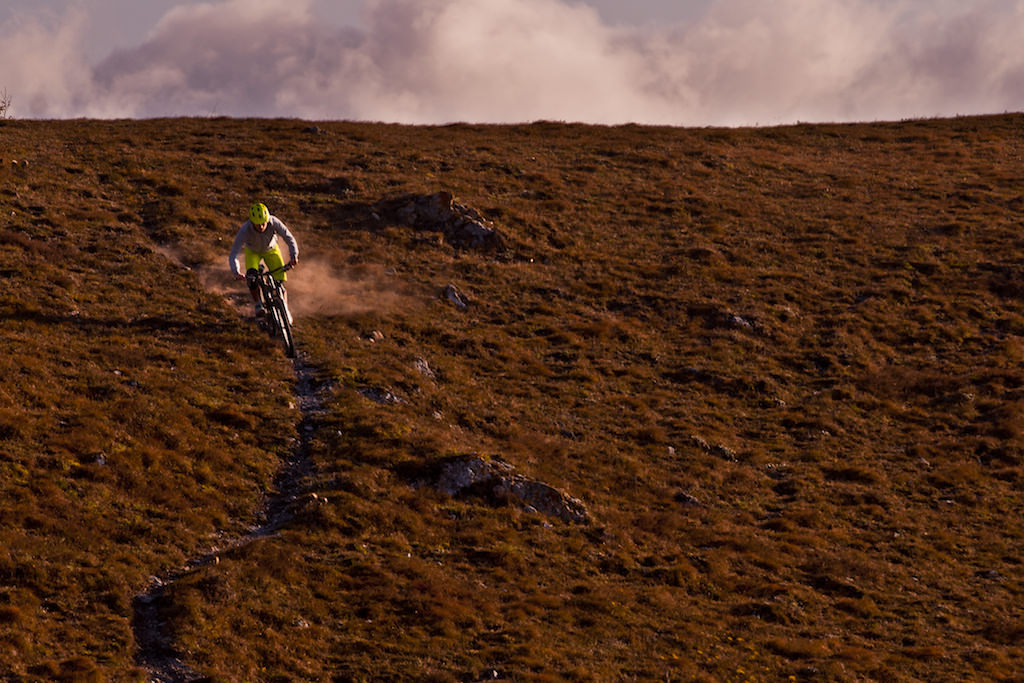
However, in the downhill, it turns out the bike is not quite the alpine beast we expected it to be. Thanks to the slack head-angle (66.5°) and long chainstays (435mm) the downhill ride runs pretty smoothly.

The handling in tight corners is quite unwieldy due to the combination of a high top tube (615mm) and a too-long stem (70mm). The latter, of course, can be easily fixed.

Furthermore, the thin Schwalbe Nobby Nic Pneus, with a width of 2.25” in the less grippy Pacestar Compound version, decrease the Yeti’s downhill potential. Better tires would lead to a more predictable bike/track relationship and would also offer more pinch-flat security.Those seeking a plush bike with lots of forgiveness will not find it in the SB-66. The Yeti requires a more experienced rider able to guide the firm and progressive suspension system actively through the terrain, pushing the SB-66 to perform at its best.
An obligatory must-have for a bike of this category is a height-adjustable telescopic seatpost, which will again definitely increase the fun factor, especially because of an already existing internal cable routing. Before every DH, however, we found ourselves opening the quick release, lowering the saddle, and closing the quick release. Painstaking, particularly because the test bike’s seatpost was a tight fit and the post was soon scratched.

‘Lots of style for lots of money’ is the name of the game when it comes to the Yeti SB-66 distributed in Germany/Europe. However, there are a lot of different build-kits available, many of which are a good deal in America. What all the versions have in common: The golden Kashima suspension elements by Fox (Float RP23, 32 Float 150 FIT RCL). They demonstrate the close cooperation between Yeti and Fox and furthermore the commendable focus on a high-tech suspension.

Conclusion: The American boutique manufacturer has forged yet another beautiful rig. To be honest, we had expected a little bit more of the Yeti. Small changes like putting on some other components (better tires, shorter stem) help a lot to get a lot more performance out of it. Generally speaking. the SB-66 is good for almost everything – enduro, trail-riding, and all-mountain. Anyone focusing on an individual build, rather than standard equipment for such an exclusive bike, can buy the frame separately – available either in aluminum or carbon – to create a personal and unique bike.
More info: www.yeticycles.com Photo: Christoph Laue Text: Daniel Häberle
Did you enjoy this article? If so, we would be stoked if you decide to support us with a monthly contribution. By becoming a supporter of ENDURO, you will help secure a sustainable future for high-quality mountain bike journalism. Click here to learn more.