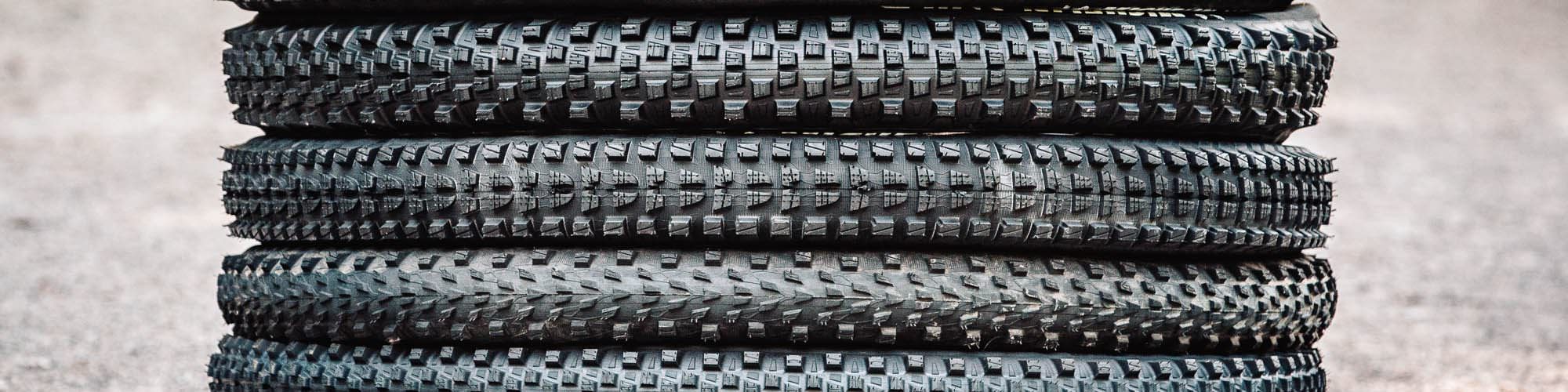
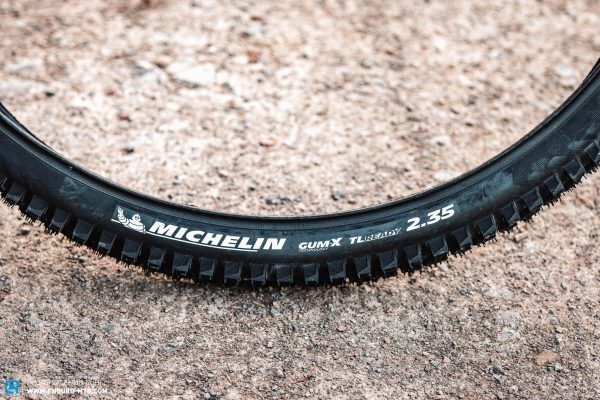
French megabrand Michelin is the second biggest tire manufacturer in the world, although bicycle tires make up only a small part of the business. However, their bicycle tires no doubt profit from the rubber know-how they’ve gained in the automobile sector: several EWS teams are having a lot of success on Michelin tires and the brand is making a comeback in the downhill scene as well, though we’ve only seen prototype models so far.
Here you’ll find everything you need about mtb tires: The Best Mountain Bike Tire – We had them all!
Casing
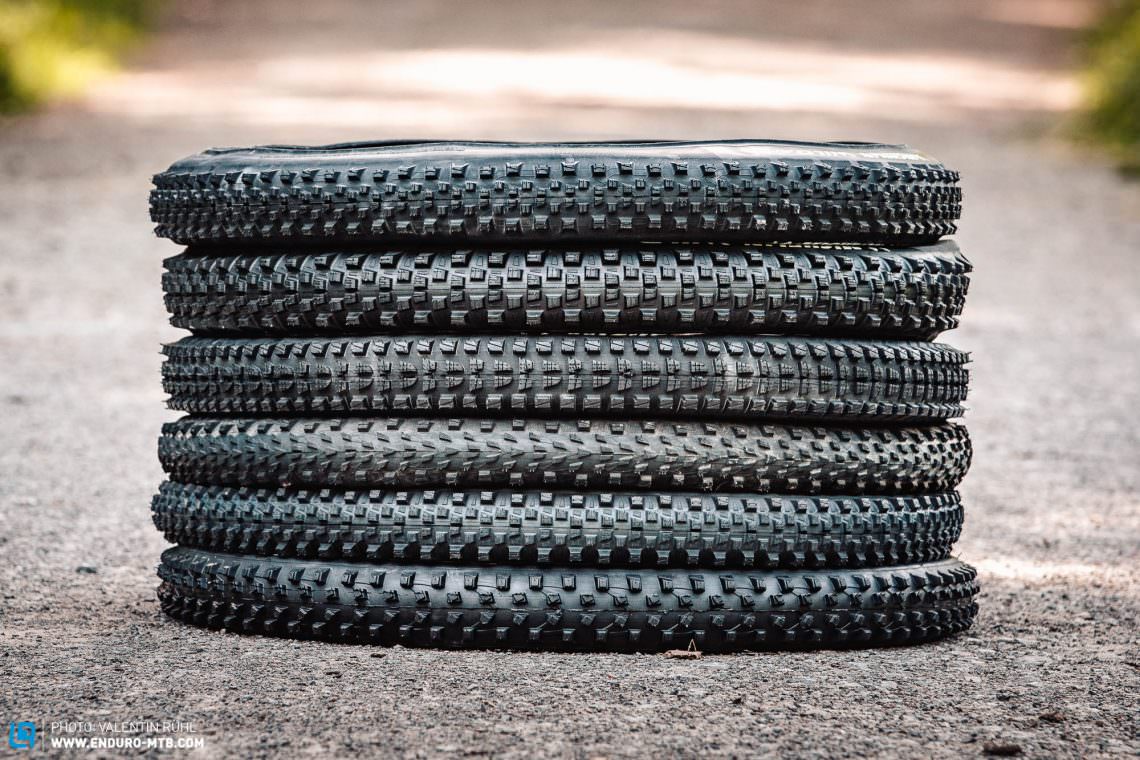
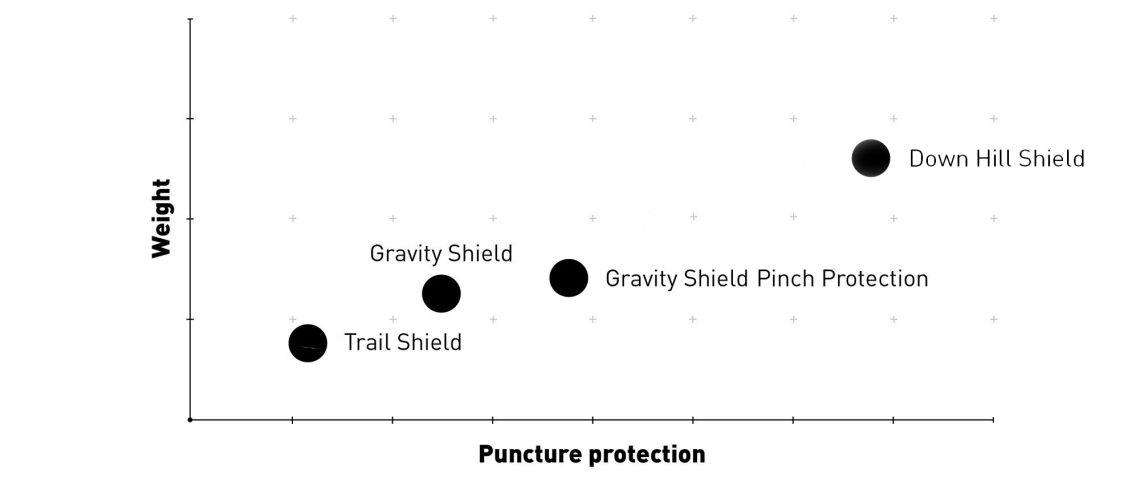
Michelin have three different casings available for Trail and Enduro bikes. You won’t be able to mix and match Michelin’s different carcasses as easily as you can with Schwalbe or MAXXIS, as some casings are only available with selected models. For example, the front Enduro tire is only available with the heavier Gravity Shield casing.
Trail Shield
Trail Shield tires are made specifically for Trail bikes. They feature a three-ply casing reinforced with a thin layer of additional puncture protection. Trail Shield tires are amongst the lightest available, with only Kenda and Continental offering a lighter option. With regards to puncture protection, they offer about the same level of puncture resistance as MAXXIS’ EXO+ tires, which makes Trail Shield a viable option for the front wheel on an Enduro bike. It’s a shame Michelin offer so few models with this construction.
Gravity Shield
The name says it all: Gravity Shield tires are made for those who follow the call of gravity and like to go as fast as possible on the descents. Michelin combine a three-ply 60 TPI casing with another three-ply 33 TPI casing for added reinforcement. The thick threads of the lower TPI casing do push up the weight of the tire, but they offer enough support for you to run lower tire pressures without having to worry about them squirming when you corner. You’ll rarely have to deal with cut sidewalls on rocky trails either. Pinch flat protection with Gravity Shield tires is better than Kenda’s EMC casing, but not quite as good as MAXXIS’ DoubleDown or Schwalbe’s Super Gravity casing, though they are a bit lighter.
Gravity Shield mit Pinch Protection
Michelin’s Pinch Protection consists of an additional layer in the sidewall of the carcass. Pinch Protection is supposed to do just that, offering added protection against pinch flats, and like MAXXIS’ Apex casing, it also supports and stabilises the side walls. It doesn’t come with a significant weight penalty while offering a considerable improvement in puncture protection. It performs significantly better than MAXXIS’ DoubleDown and is almost on the same level as Schwalbe’s Super Gravity casing. Considering the ratio of weight to puncture resistance, Michelin’s Gravity Shield combined with Pinch Protection is right up there amongst the best. Unfortunately, you’ll only find this casing on the fast rolling Force Enduro model.
Down Hill Shield
The Down Hill Shield is Michelin’s casing of choice for rough terrain and can be found on both Racing Line and Downhill tires. The four-ply casing was designed to improve sidewall stability and should offer a clear advantage over the lighter Gravity Shield casing, especially when riding at high speeds. The additional High Density Puncture Protection layer integrated into the casing design is meant to provide an additional barrier against punctures and impacts.
Rubber compounds
Michelin know a thing or two about rubber thanks to many years of experience in the automobile industry, but you could be forgiven for thinking you need a degree to understand the names of the different compounds. You’ve got everything from single to triple compounds on offer.
Gum-X2D
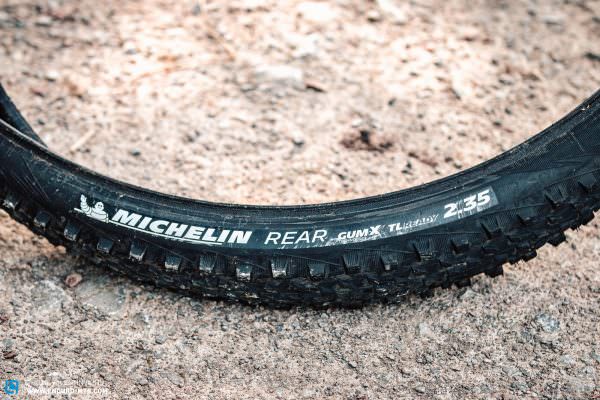
Gum-X2D is Michelin’s dual compound rubber. You’ll mostly find it on the fast rolling Force and Rock’R2 Enduro tires. The centre knobs are made of relatively hard rubber for improved durability and faster rolling. The shoulder knobs are made of a softer rubber compound so you’ll have enough traction for the corners. Combined with the tread patterns that it’s available in, Gum-X2D is only suitable for hard and dry ground, as the hard rubber compound lacks the necessary grip and cushioning needed for muddy conditions. However, the rubber does offer a lot of cornering stability and precision when you’re riding on hard-packed, dry trails.
Gum-X3D
Michelin call their triple compound Gum-X3D. As is typical in a triple compound tire, the composition starts with the hardest compound as the base, the intermediate compound for the centre tread and the softest compound for the shoulder knobs. The cornering traction of the Gum-X3D is excellent: the shoulder knobs are very grippy and also manage to offer a lot of support. Gum-X3D tires also roll fast, which makes them equally suitable as a rear tire. While the centre tread does last relatively long, the shoulder knobs lose their shape rather quickly. The braking traction provided by the centre knobs is good enough for wet conditions too.
Magi-X
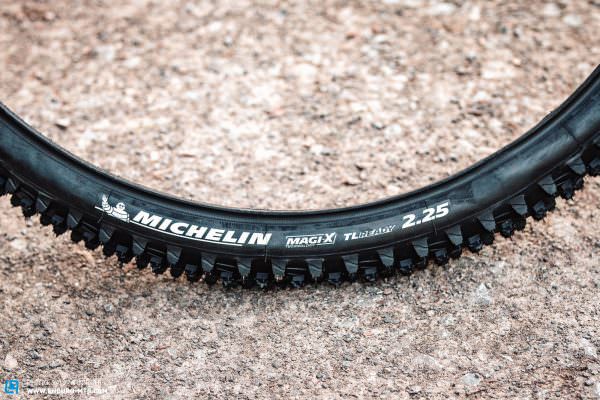
Magi-X and Magi-X2 are Michelins softest compounds. The Magi-X compound is the older version and is only used on their Mud Enduro tire. Magi-X2 is claimed to roll better, which is why you’ll find it on the Wild Enduro front tire.Regardless of whether you’re riding wet roots or rock slabs, this compound offers grip in every situation. However, a lot of grip on a Michelin tire goes hand in hand with high rolling resistance and a short life span. We would only recommend the Magi-X2 compound for the front where it will offer even more grip than the Gum-X3D Wild Enduro.
Magi-X DH
The MAGI-X DH is Michelins softest rubber compound and can be found primarily on their DH tires in combination with the robust Down Hill Shield casing. While the soft MAGI-X DH ensures a high level of traction both on wet and dry terrain, it inevitably results in increased rolling resistance and faster wear compared to Michelin’s harder rubber compounds.
Tread pattern
Every Michelin tread pattern is designed for a specific job and where it will perform at its best. However, the Wild range is the most versatile in Michelin’s portfolio.
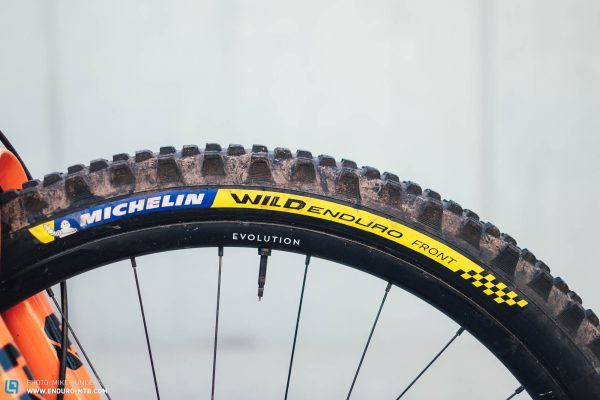
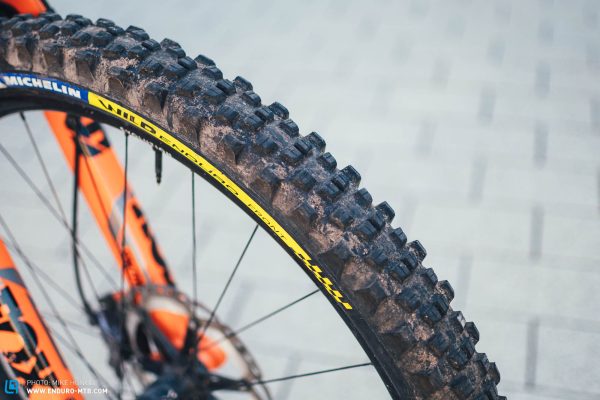
Wild Enduro Front
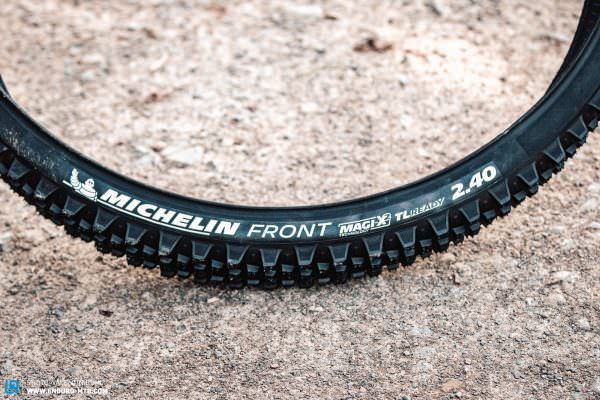
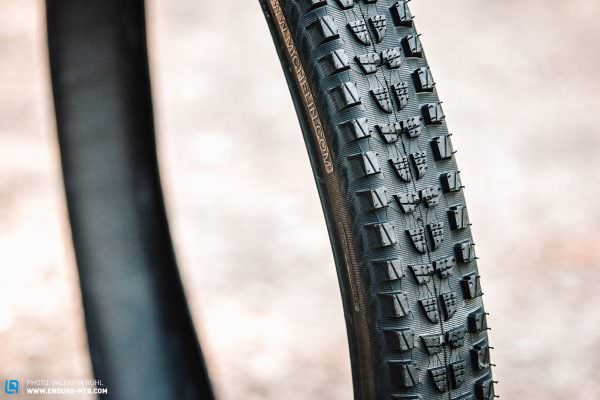
You’ll recognise the Wild Enduro Front by its huge shoulder knobs. It’s all about generating maximum grip. The aggressive, open tread pattern digs into soft ground and hardly gets clogged up with mud thanks to its good self-cleaning properties. With the Wild Enduro Front, you’ll always remain in control and stay on the exact line you choose. If you’re looking for maximum grip on the descents, you could also use it as a rear tire, but we’d recommend you go with the slightly harder Gum-X3D version. For a fast-rolling setup, you could combine the Wild Enduro Front with the Wild Enduro Rear or the Force Enduro.

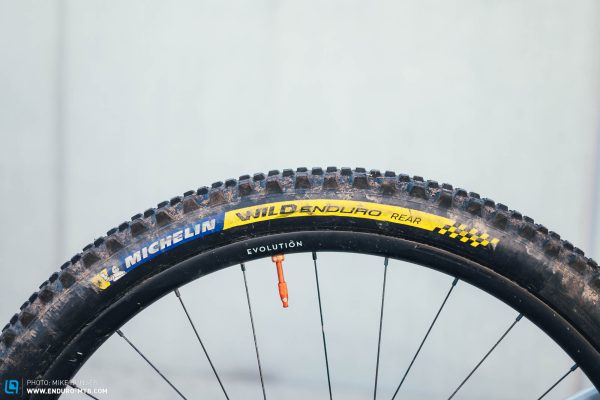
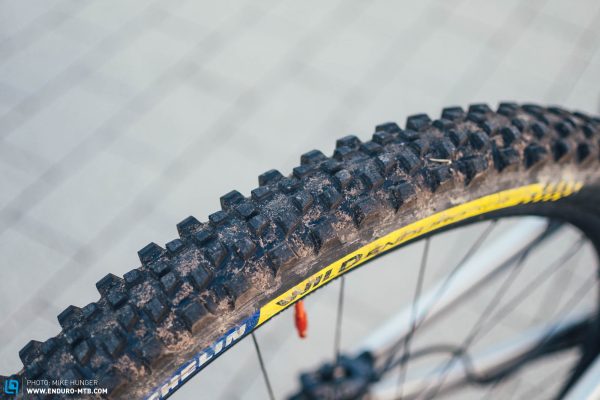
Wild Enduro Rear
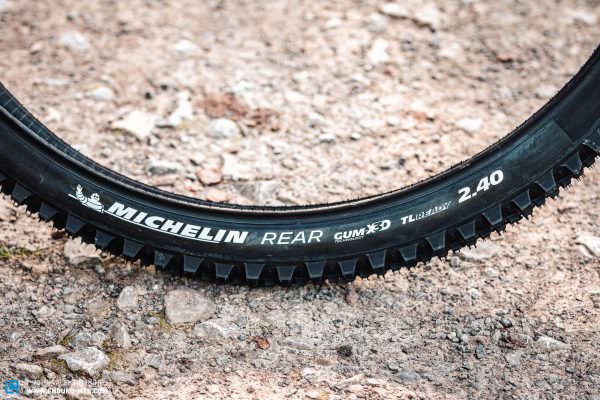
The Wild Enduro Rear is very similar to the Wild Enduro Front, although the knobs aren’t quite as tall and aggressive for decreased rolling resistance. Fitted on the rear wheel, things do indeed get wild. The back end slides out quite easily but it’ll let you regain control just as quickly, allowing you to drift around corners at speed. You won’t only look like you’re pinning it, you’ll also have a lot of fun. If you want to stick to one tire combination on your Enduro bike, the Wild Enduro Front and Rear are a very good choice.
Wild Enduro Front Racing Line
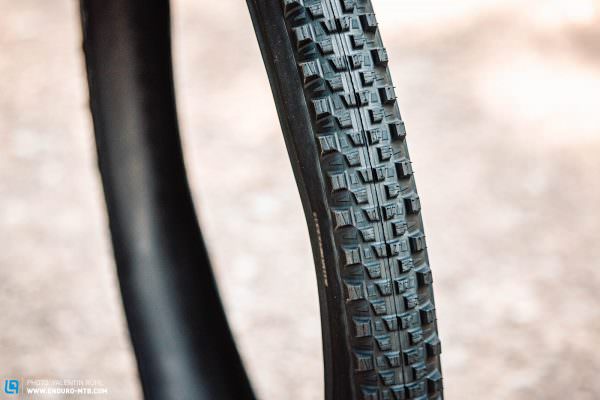
The Wild Enduro Front Racing Line edition uses the same tread pattern as the conventional Wild Enduro Front model but is only available in one rubber compound, Michelin’s newly-developed MAGI-X DH. This ensures excellent control both in dry and wet conditions and is combined with Michelin’s new Down Hill Shield casing, which offers good puncture protection.
Wild Enduro Rear Racing Line
The Wild Enduro Rear Racing Line relies on the same tread pattern as the conventional Wild Enduro rear model. Like its front-specific Racing Line counterpart, it employs Michelin’s soft MAGI-X DH rubber compound, which offers excellent traction but comes at the expense of rolling resistance. The Down Hill Shield casing ensures good puncture protection.
DH22
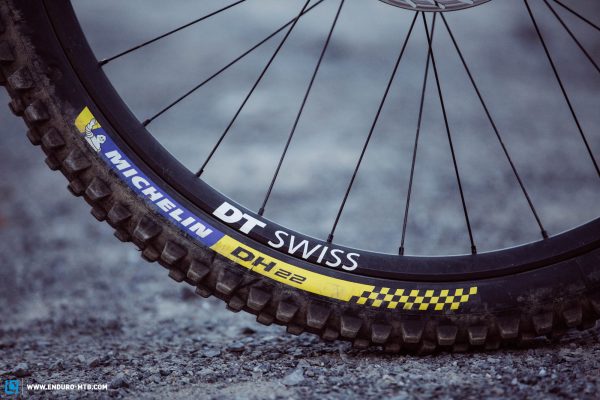
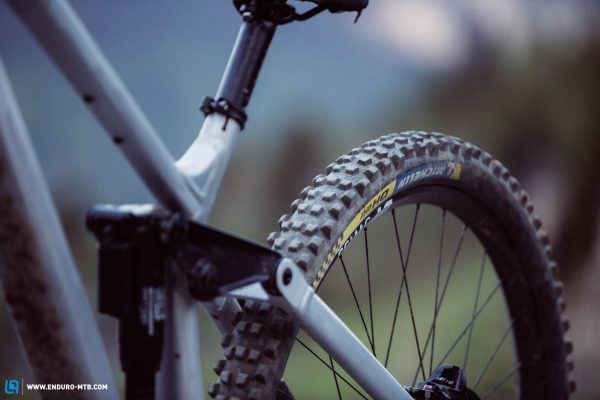
Although the name suggests that the Michelin DH22 was designed primarily for tough downhill riding, it’s also an excellent option for potent enduro bikes – especially at the front. The MAGI-X DH rubber compound ensures top traction while the Down Hill Shield casing offers good puncture protection. The open pattern and long knobs ensure sufficient traction on loose terrain, while the lugs remain supportive and don’t fold under hard cornering and braking.
Wild AM
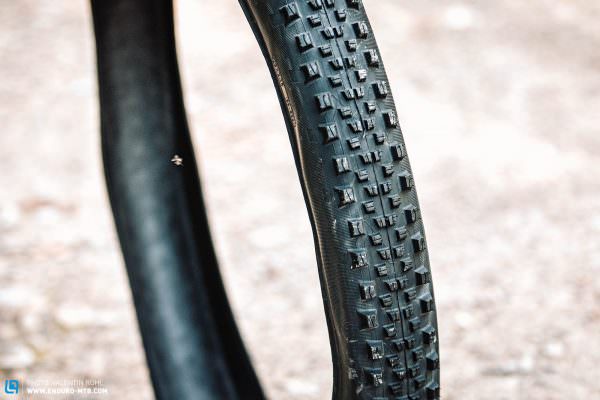
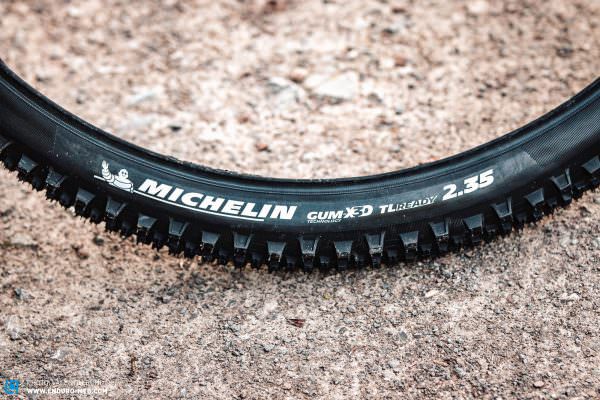
The Wild AM is based on the Wild Enduro Rear. They have very similar tread patterns and the handling is correspondingly similar. The centre knobs are slightly shorter, making them very fast rolling but without compromising braking traction too much. They’re a good option for the front and rear wheel of a Trail bike, even in wet conditions. However, if you want maximum climbing efficiency, you’d be better off with a faster rolling tire on the rear. The Wild AM is a good all-round tire, delivering a convincing performance on every kind of terrain.
Force Enduro
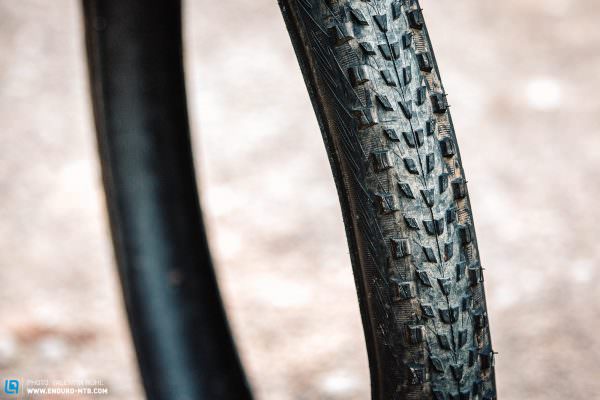
The Force Enduro is Michelins rear-specific tire. With its shallow tread, the rolling resistance is kept to a minimum, making long, arduous climbs that much more bearable. The centre knobs are so small that they only offer minimal braking traction. In wet conditions, that’s exacerbated and the Force Enduro feels like you’re on skis, especially if you try braking. On hard ground, the shoulder knobs provide sufficient cornering grip and stability to be paired with a Wild Enduro up front. On the rear, the shoulder knobs won’t fold and the tire slides out in a controlled and predictable way. It is for good reason that Michelin use their Gravity Shield casing together with Pinch Protection on the Force Enduro.
Mud Enduro
The Mud Enduro has got the most aggressive knobs that we’ve ever seen on an Enduro tire. Made specifically for wet, muddy, forest sludge, the open tread pattern, the long knobs and the narrow carcass cut into the ground until they find traction. You won’t have a chance with these on hard surfaces. If you’re looking for a mud tire to use in the summer when the trails are covered in a deep layer of dust, you can always cut the knobs down a bit to make it rideable. Michelin have taken a cue from the pros for the production model, moulding in “cut along the dotted line” markings on the knobs. Once cut down, the Mud Enduro rolls significantly better and it becomes a lot more precise on hard ground. Still, you should only ever use it on the front. There, the Mud Enduro is an excellent choice for steep terrain in the winter, or for particularly dry and dusty summers.
Rock’R2
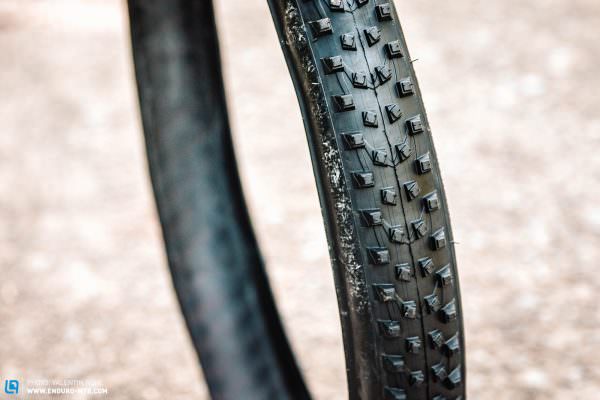
The Rock’R2 is one of Michelin’s most durable tires, made specifically for hard packed, rocky and rough trails. With its massive knobs and deep siping, it can find purchase on the rockiest of terrain. There was hardly any other tire in the test field capable of generating as much cornering and braking traction on hard ground. The centre knobs are arranged lengthways and sideways in an alternating pattern, keeping the rolling resistance acceptable. However, with the tread as closely spaced as it is, it does pack with mud more easily than the Wild Enduro. The shoulder knobs behave similarly to the MAXXIS Minion. They offer enough support in berms without squirming and deliver enough traction on gravel. We’ve never experienced pinch flats on the Rock’R2, despite being available only with the Gravity Shield casing.
Our recommendations
Enduro – full throttle (f/r): Mud Enduro (cut down) / Wild Enduro Front
Enduro – all-round (f/r): Wild Enduro Front / Wild Enduro Rear
Trail – grip (f/r): Wild AM / Wild AM
For more information head to michelin.de
Our big ENDURO group test at a glance
Here you’ll find everything you need about mtb tires: The Best Mountain Bike Tire – We had them all!
All the models in test



Did you enjoy this article? If so, we would be stoked if you decide to support us with a monthly contribution. By becoming a supporter of ENDURO, you will help secure a sustainable future for high-quality mountain bike journalism. Click here to learn more.
Words: Photos: Valentin Rühl