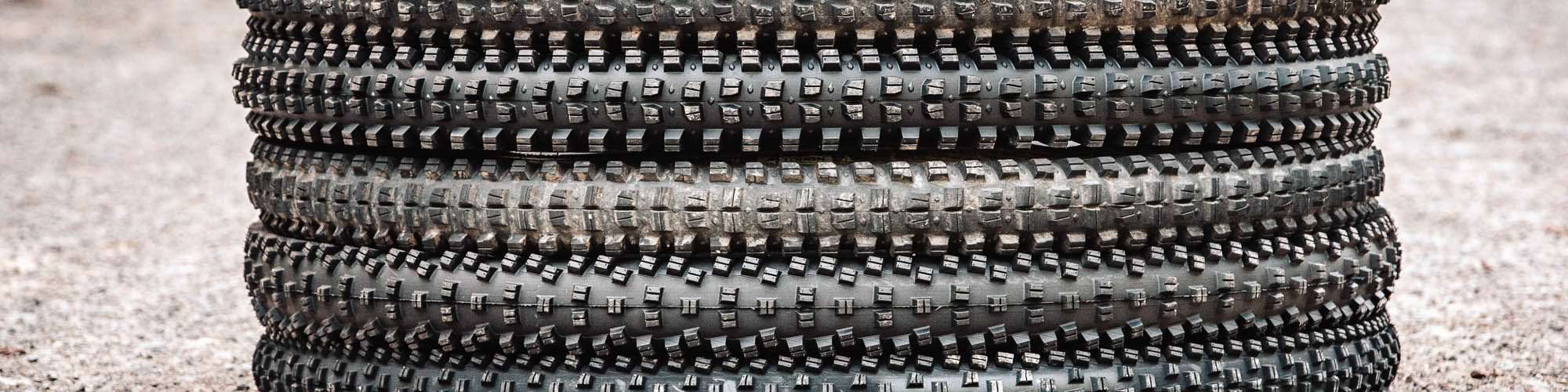
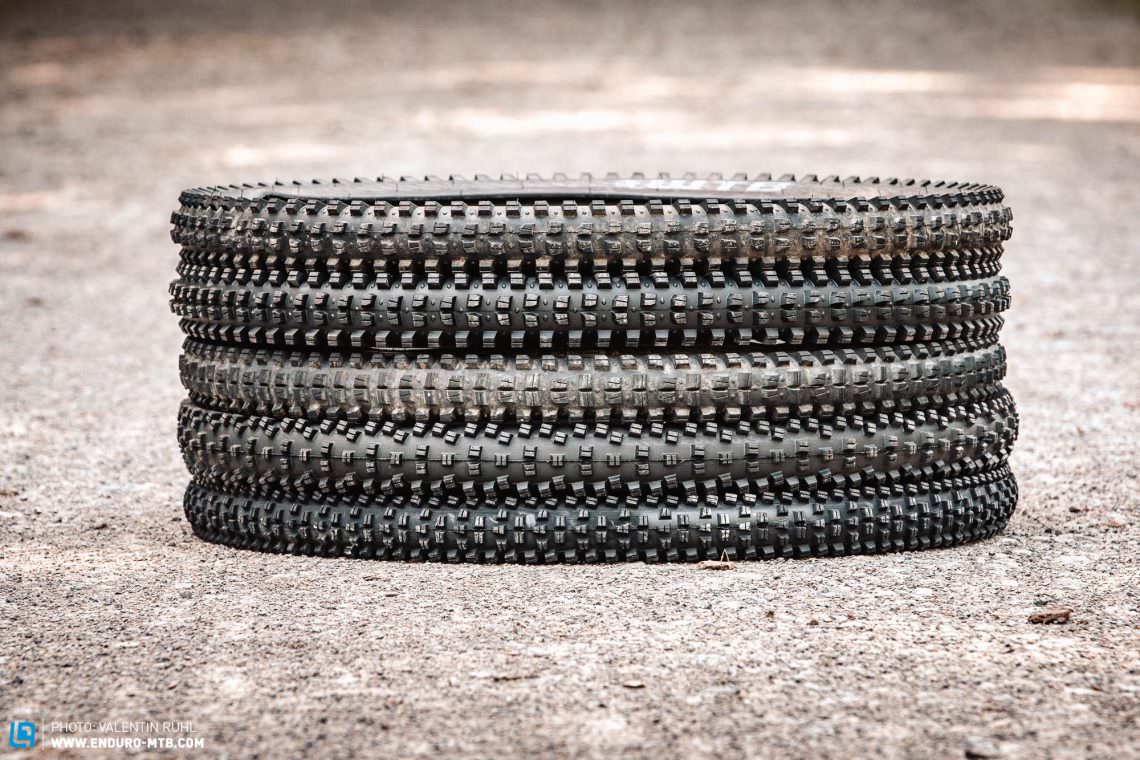
Wilderness Trail Bikes hail from the birthplace of mountain bikes: California. WTB’s mission has always been to produce reliable and high-quality mountain bike components. Recently, they have done a lot of work on updating their tire range, cranking out several new designs in a very short space of time and optimising and improving some of their existing favourites.
Here you’ll find everything you need about mtb tires: The Best Mountain Bike Tire – We had them all!
Casing
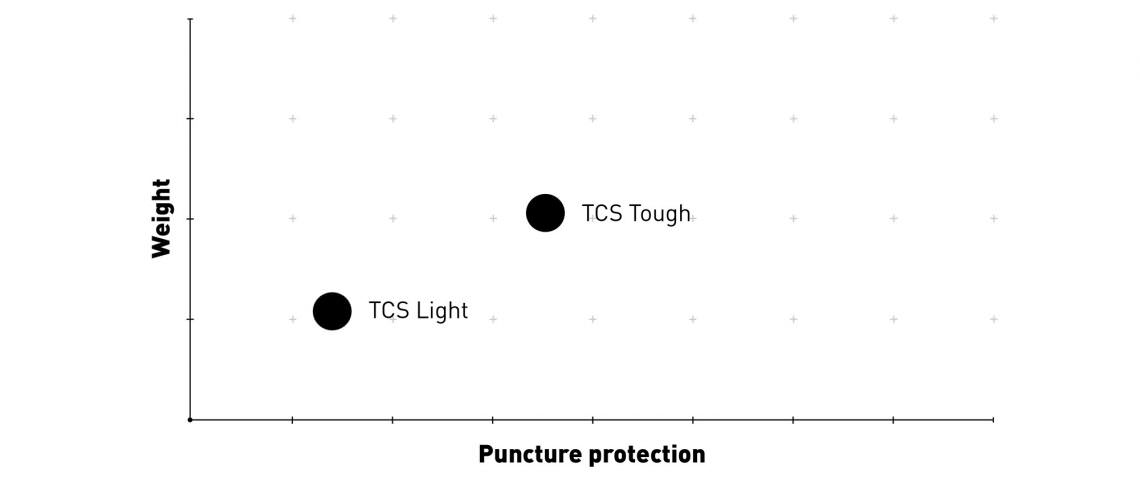
The award for the best product names goes to… WTB. While you’ll often feel helplessly lost trying to navigate the unintelligible abbreviations other tire manufacturers use, WTB have somehow been able to express themselves a lot more clearly. They offer two Trail and Enduro casings: Tough and Light. The Light casing features an additional fabric insert they’ve named Slash Guard. During fitting, we found that all WTB tires needed at least ⅓ more tubeless sealant to seal properly once seated on the rim.
TCS Light Casing + Slash Guard
WTB’s lighter carcass makes for an ideal all-rounder. The Slash Guard is a layer of nylon fabric that is sandwiched in the sidewalls of the casing. The improvement in pinch flat protection compared to WTB’s previous models without the Slash Guard insert is huge. In fact, they’re almost as sturdy as the heavier Tough carcass. While you’re unlikely to suffer a punctured or slashed sidewall, Slash Guard doesn’t do much to improve cornering stability. The tire will squirm at lower tire pressures, especially with heavier riders.
TCS Tough Casing
WTB’s heaviest carcass is designed for Enduro bikes. You won’t find a downhill specific tire in the American brand’s catalogue, but most Enduro riders wouldn’t need them anyway. WTB’s heaviest casing is unphased by the kind of impacts that might leave a dent in your rim. The Tough carcass adds twice the layers and protection of the Light version (with the exception of the Slash Guard insert). As a result, the tire stays securely seated on the rim and doesn’t squirm at low tire pressures, remaining predictable and precise through corners. However, the construction adds about 150 g to the tire weight.
Rubber compounds
WTB’s flagship range features triple-compound constructions. As aptly named as ever, WBT don’t leave you guessing what the TriTec High Grip and TriTec Fast Rolling compounds are for. WTB use a unique moulding method where the hard rubber used for the base also extends into the core of the knobs. This is intended to offer additional support and prevent the knobs from folding, particularly during hard cornering manoeuvres, though we didn’t really find this particularly noticeable for the majority of WTB’s tires tested. Theoretically this also means that TriTec tires could suddenly become less grippy once the knobs are worn down to the base rubber.However, in practice, during the lifespan of the tires we never encountered this issue.
TriTec Fast Rolling
The name says it all. For the TriTec Fast Rolling compound, WTB rely on a relatively hard rubber for the centre tread. Rolling resistance is significantly reduced and wear is limited. Fast Rolling is always a good choice for the rear thanks to the very soft shoulder knobs which offer good grip through corners. However, used up front, the level of braking traction is well below that of MAXXIS’ 3C Maxx Terra compound. Pair it with an aggressive tread such as that of the Judge and the hard Fast Rolling compound is still able to deliver enough traction for the front wheel of a Trail bike.
TriTec High Grip
Wet weather, Enduro races or nasty roots: TriTec High Grip is WTB’s answer when you need all the traction you can get. The soft shoulder knobs provide a lot of grip on soft ground, but they aren’t all that well supported on hard ground or with heavy riders. On all the tires we tested, with the exception of the Trailboss, the shoulder knobs ended up folding when pushed hard. The soft compound offers good braking traction in the wet. While the rubber edges of the High Grip centre knobs don’t get torn off from braking, they do wear down relatively quickly.
Tread pattern
Before WTB’s tire range got updated, you would have been somewhat limited for choice with a lot of the more aggressive Enduro tires not available in a 29″ size. However, last year WTB expanded the range of available sizes of their two classics, the TrailBoss and Vigilante. Their mud tire, the Warden was replaced by the brand new Verdict Wet, and is now also offered as an all-round version, the Verdict, which is designed with shorter knobs.
Vigilante
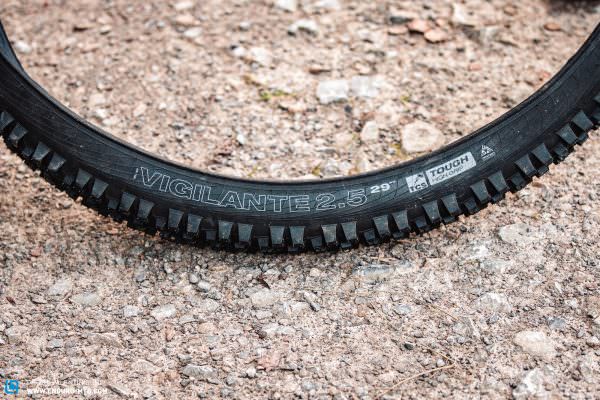
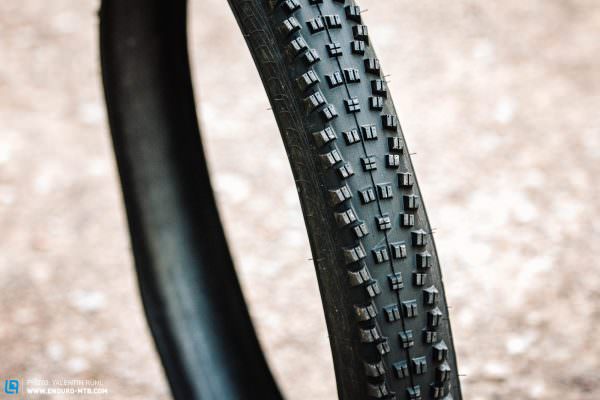
The Vigilante is an old acquaintance in the WTB lineup. This all-round tire is ideal for both the front and rear. On the 2.5″ wide model, the offset shoulder knobs end up more on the top than the side, giving the tire a rather square profile. On soft ground, the long shoulder knobs easily find grip. As you lean the bike over slightly, the inwardly offset shoulder knobs dig in, providing the transition to the alternating outward pointing shoulder knobs, which offer all the grip you need as you tip your bike properly into the corner. Unfortunately, all that traction is lost in hard berms as the knobs fold, though they do this in a predictable way, which can be a lot of fun if you enjoy drifting. The long knobs even offer a lot of grip in muddy conditions, but they reach their limits when it gets really thick and sticky.
Trail Boss
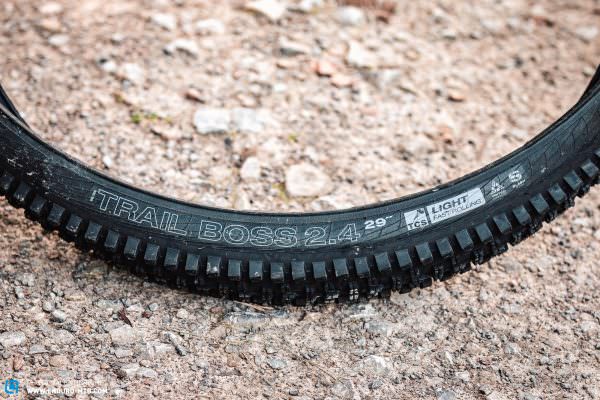
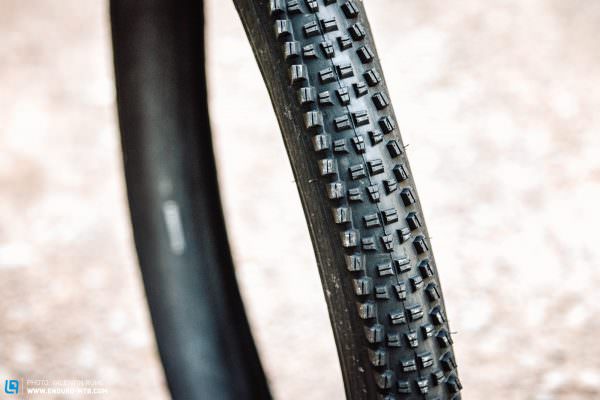
Steep climbs, dry hard-packed berms and rock slabs are the terrain the Trail Boss is made for. The knobs of this fast rolling tire don’t fold and the handling is always precise and stable. With its shallow tread profile and many small knobs, it behaves similarly to Schwalbe’s Hans Dampf. The knobs are evenly distributed, allowing you to transition from the centre to the shoulder knobs without any loss of grip. When the Trail Boss does slide out, it’s quickly able to regain control, with an edge of at least one the knobs quickly finding grip somewhere. As a fast-rolling combination on your Trail bike, it works both up front and on the back. It lacks the braking traction needed up front on really steep Enduro tracks though.
Judge
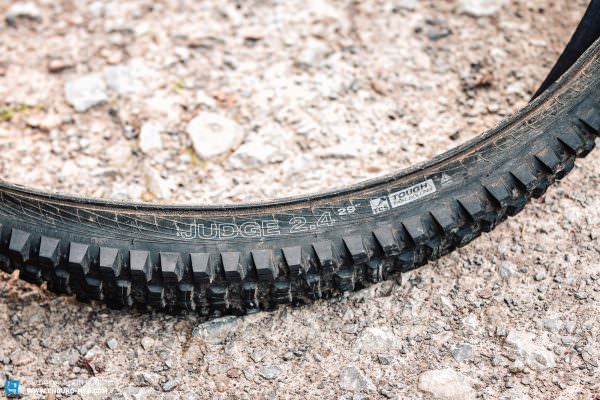
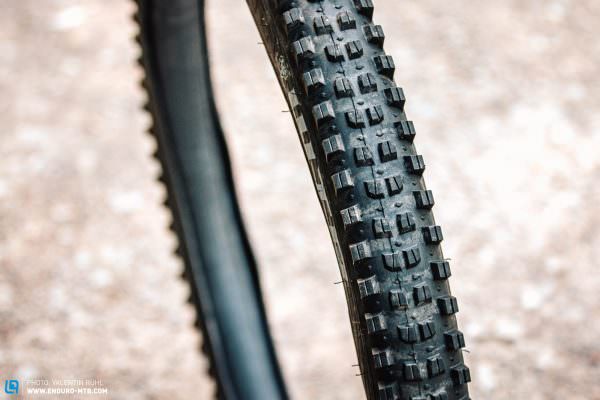
According to WTB, the Judge is a rear tire made for very rough terrain. Whether in the bike park, on super steep downhills tracks or on freshly cut Enduro stages, the massive knobs of the Judge will dig into the ground. The centre knobs are chamfered on one side to reduce rolling resistance. However, the Judge is undoubtedly a tire made for descending – climbing is only a means to an end. Though the Judge sheds mud very effectively, the wide gap between the centre and shoulder knobs means you’ll have lean the bike over quite aggressively when going into a corner so that the shoulder knobs dig into the ground. Like the MAXXIS Minion DHR II, the Judge also does very well on the front wheel despite the fact that the tread pattern was designed for the rear. You’ll pay the price only on hard-packed berms. Although the shoulder knobs don’t fold as easily as WTB’s other tires, they bounce back suddenly and uncontrollably as soon as you let off the pressure.
Verdict und Verdict Wet
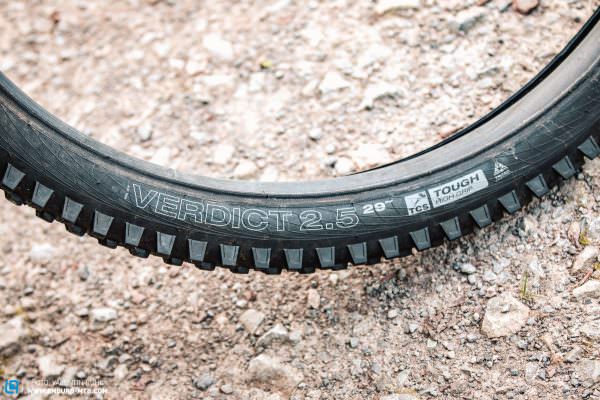
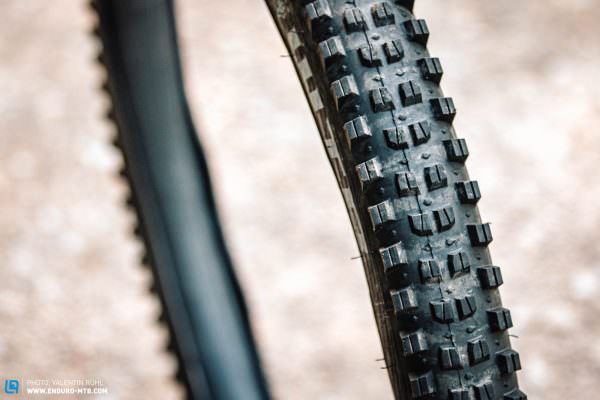
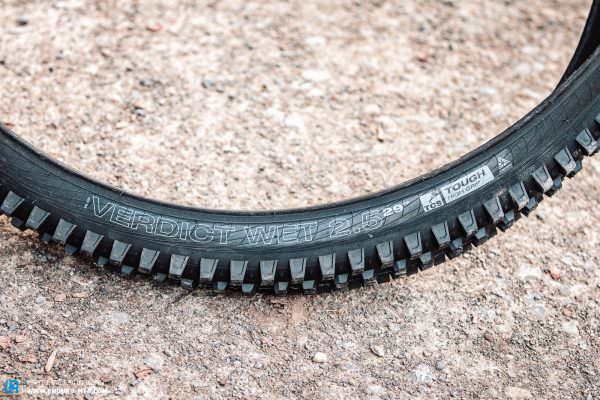
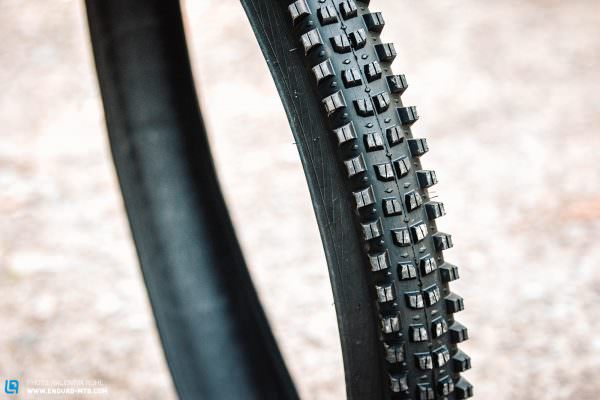
Have you ever seen a pro racer riding a mud tire in the middle of summer? When things get particularly dry and dusty, mud tires can actually be very effective. If you go the DIY route, cutting down the knobs by a few millimetres keeps the handling more precise on harder ground. WTB have already done that for you with the Verdict, so you don’t have to. While the Verdict Wet is a true specialist for the worst of the Scottish winter and only works on soft, muddy ground with its super aggressive knobs, the Verdict uses the same tread pattern but with shorter centre knobs, making it much more versatile. Both versions of the Verdict only make sense on the front due to their high rolling resistance. Besides ruts filled with the finest dust, it also performs well in berms, on rocks slabs or on gravel. But it feels most comfortable on fresh forest soil: loam is the Verdict’s preferred terrain.
Our recommendations
Enduro – all-round (f/r): Verdict, TriTec High Grip, TCS Light Casing with Slash Guard / Judge, TriTec Fast Rolling, TCS Tough Casing
Trail – grip (f/r): Vigilante, TriTec High Grip, TCS Light Casing with Slash Guard / Vigilante, TriTec Fast Rolling, TCS Tough Casing
Trail – fast rolling (f/r): Trail Boss, TriTec Fast Rolling, TCS Light Casing with Slash Guard / Trail Boss, TriTec Fast Rolling, TCS Light Casing with Slash Guard
For more information head to wtb.com
Our big ENDURO group test at a glance
Here you’ll find everything you need about mtb tires: The Best Mountain Bike Tire – We had them all!
All the models in test






Did you enjoy this article? If so, we would be stoked if you decide to support us with a monthly contribution. By becoming a supporter of ENDURO, you will help secure a sustainable future for high-quality mountain bike journalism. Click here to learn more.
Words: Photos: Valentin Rühl